- HEARING AIDS & HEARING CARE ACROSS SCOTLAND
- 01506 420519


The Truth About Hearing Loss and Dementia
January 21, 2026
The Game-Changer in Discreet Hearing Aids
July 13, 2026
From Scepticism to Wow: Real-World Performance Review of the Oticon Zeal Hearing Aid
The Oticon Zeal hearing aid has generated considerable buzz since its launch in late 2025. As a highly discreet, completely-in-the-canal (CIC) device, it promises premium performance without the visible components typical of larger receiver-in-canal (RIC) models. Many users and professionals approach it with initial scepticism—after all, cramming advanced AI, rechargeability, and connectivity into such a tiny form factor sounds almost too good to be true. Yet early real-world feedback and reviews suggest it often delivers a genuine “wow” moment.
Oticon positions the Zeal as a breakthrough “NXT” category hearing aid, blending near-invisibility with features usually reserved for bulkier designs. At its core is Oticon’s BrainHearing™ philosophy, supported by second-generation AI (a deep neural network, or DNN 2.0) trained on millions of real-world sounds-reports cite figures around 12 million. This AI is always on, constantly analysing the sound environment to prioritise speech while suppressing noise, aiming to reduce listening effort and enhance clarity without manual adjustments.
Speech Clarity and Performance in Noisy Environments
One of the most common challenges with hearing loss is separating speech from background din—in cafés, restaurants, family gatherings, or busy streets. Early reviews highlight how the Zeal tackles this effectively for many wearers. The AI-driven processing provides a fuller, more balanced sound scene, with clinical claims of up to 12 dB noise suppression and 6 dB speech clarity enhancement in testing.
Users report noticeable improvements in everyday scenarios. For instance, conversations feel more natural and less strained, with voices emerging clearly even amid competing sounds. One wearer described the sound as “full” and emotional when listening to music or audiobooks, while others note better performance in noisy settings compared to older in-the-ear models. Professionals who tested it hands-on, including visits to Oticon’s headquarters, express surprise at how well it handles complex environments, often performing similarly to RIC aids in speech-in-noise tasks.
That said, results vary. Some users with more significant hearing loss or very demanding noisy situations find it strong but not always matching the absolute top-tier RIC models (like Oticon’s own Intent line) in extreme conditions. For mild to moderate losses—the primary fitting range—it’s frequently praised as a substantial step up, with less mental fatigue after prolonged use.
Everyday Use: Insertion, Removal, and Comfort
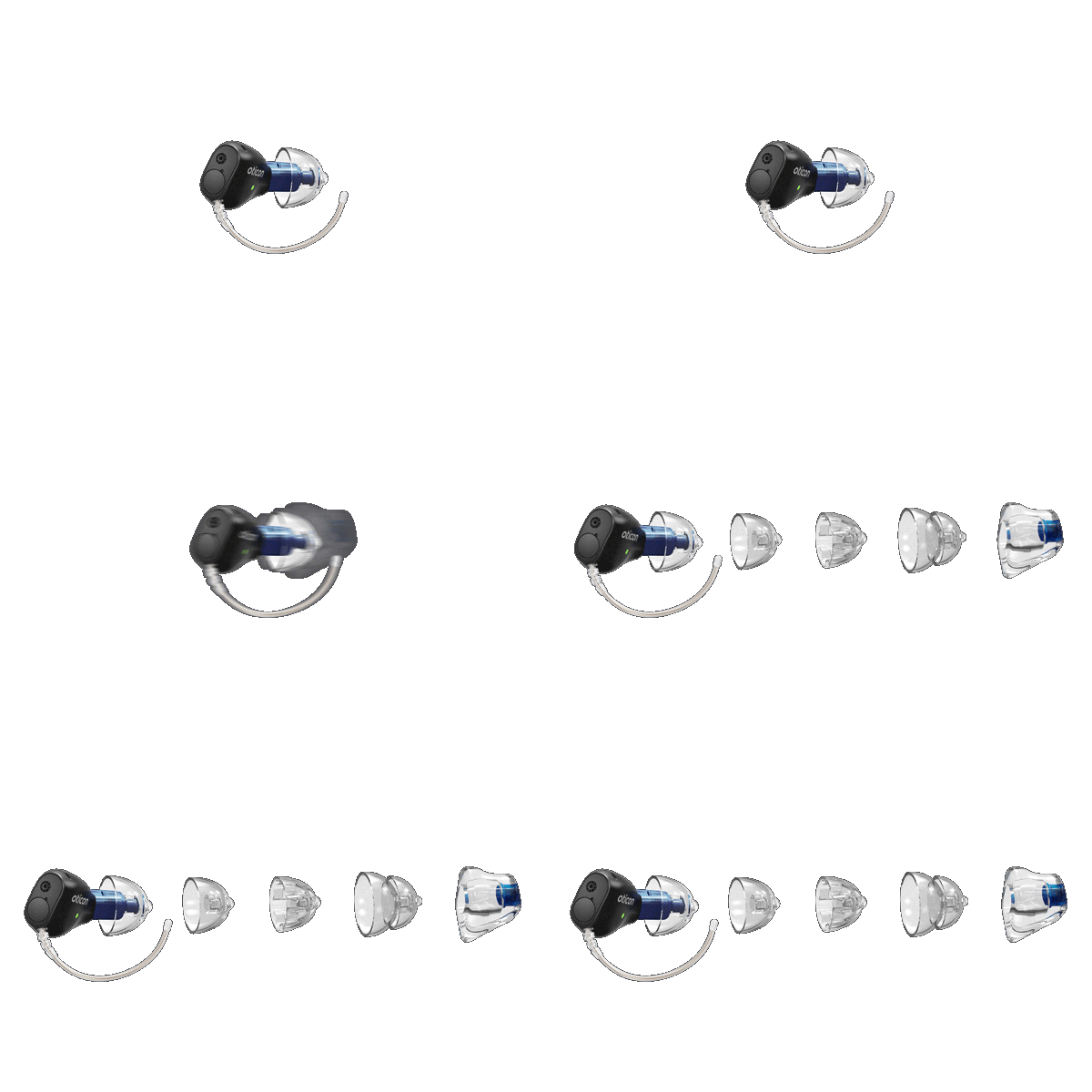
A standout practical advantage is the Zeal’s user-friendly design. It uses an innovative 3-in-1 antenna/retention/removal cord, making insertion and removal far simpler and more secure than many traditional CIC aids. Reviewers describe it as “much easier to put in” and more stable once fitted, reducing the fiddly feel some associate with invisible styles.
Comfort is another strong point. The instant-fit option (with standard domes) allows same-day trialling without custom moulds, and clinical data indicates that around 94% of users achieve invisible or barely visible placement. Wearers appreciate the absence of behind-the-ear clutter—no interference with spectacles or hats—and all-day wear without irritation for most. The rechargeable battery delivers up to 20 hours of use, with a compact charger that’s portable, though some note the charger feels bulky relative to the tiny aids themselves.
Bluetooth LE Audio connectivity adds modern convenience, enabling seamless streaming from phones, tablets, TVs, and more, plus hands-free calls and Auracast support for public venues. Tap controls offer discreet adjustments, and the Oticon Companion app is on hand should it be needed.
Does It Truly Compete with Larger RIC Models?
This is where the Zeal surprises most. Traditionally, CIC aids sacrificed power, features, or connectivity for discretion. The Zeal challenges that compromise head-on. Independent reviewers and audiologists who’ve compared it directly state it delivers RIC-like performance in a much smaller package—similar sound quality, amplification, and AI processing, but without visible components.
For those prioritising invisibility while wanting premium tech, it’s a compelling alternative. It may not suit severe losses or those needing maximum power in the noisiest settings, but for many active users seeking discretion without downgrading experience, it holds its own remarkably well.
In summary, the journey from scepticism to “wow” is a recurring theme in early experiences with the Oticon Zeal. It doesn’t just shrink the hardware—it redefines what’s possible in discreet hearing tech. If you’re considering an upgrade and value both performance and subtlety, it’s well worth a professional trial to see if it delivers that transformative moment for you. Give me a call to arrange a no obligation trial.